
Introduction to Bindabasini Temple Pokhara
Bindabasini Temple is one of the most revered Hindu temples in Pokhara and holds deep spiritual, cultural, and historical importance. Located on a small hill near the Old Bazaar area, the temple is dedicated to Goddess Bindabasini, an incarnation of Goddess Durga. It is a major place of worship for locals and an important spiritual stop for travelers exploring Pokhara’s cultural heritage.
Unlike adventure-focused attractions such as paragliding or trekking, Bindabasini Temple offers a peaceful and devotional experience. The temple provides visitors with a chance to witness local religious practices, traditional architecture, and panoramic views of Pokhara city, making it a meaningful destination for both pilgrims and tourists.
Why Bindabasini Temple Is One of Pokhara’s Most Sacred Attractions
Bindabasini Temple is considered one of the most sacred attractions in Pokhara due to its long-standing religious significance and strong connection with local beliefs. Devotees visit the temple daily to offer prayers, flowers, and offerings, believing that Goddess Bindabasini fulfills wishes and protects the city from misfortune.
The temple becomes especially vibrant during major Hindu festivals such as Dashain, when thousands of worshippers gather for special puja and rituals. For visitors, this sacred atmosphere offers a unique opportunity to experience Nepal’s living religious traditions and understand the spiritual life of the local community.
Overview of the Temple’s Spiritual and Cultural Importance
Beyond its religious role, Bindabasini Temple represents the cultural heart of Pokhara’s Old Bazaar area. The temple reflects traditional Nepali pagoda-style architecture and serves as a center for community gatherings, rituals, and festivals. For generations, families in Pokhara have considered Bindabasini Temple an essential place for life events, prayers, and spiritual blessings.
From a cultural perspective, visiting Bindabasini Temple helps travelers understand the blend of Hindu faith, local traditions, and everyday life in Pokhara. It is not only a place of worship but also a symbol of the city’s identity and spiritual heritage.
History of Bindabasini Temple
Bindabasini Temple has a rich historical background that dates back several centuries and is closely connected with the early settlement of Pokhara and the Kaski region. The temple has long served as a spiritual center for local communities and continues to be one of the most important Hindu shrines in western Nepal. Its history reflects the deep-rooted devotion to Goddess Durga and the cultural evolution of Pokhara as a religious and trading hub.
Origins and Establishment of the Temple
The origins of Bindabasini Temple are believed to date back to the 18th century during the early Shah dynasty period. According to historical accounts and local legends, the main idol of Goddess Bindabasini was brought to Pokhara from the Bindhyabasini area of India. The temple was later established on a hilltop in the Old Bazaar area, which was one of the earliest settlements in Pokhara.
Over time, the temple complex expanded with the addition of shrines, courtyards, and resting areas for devotees. Its elevated location was chosen for spiritual reasons as well as for its peaceful surroundings and views over the growing town. The temple gradually became a focal point for religious activities and daily worship in the region.
Goddess Bindabasini and Her Religious Significance
Goddess Bindabasini is worshipped as a powerful form of Goddess Durga, symbolizing strength, protection, and motherly compassion. She is regarded as the guardian deity of Pokhara and is deeply respected by the local community. Devotees believe that the goddess protects the city from misfortune and blesses her followers with prosperity and well-being.
In Hindu tradition, Goddess Durga represents the triumph of good over evil. Worship at Bindabasini Temple is considered highly auspicious, and many people visit the temple before important journeys, new beginnings, and major life events. This strong religious belief has preserved the temple’s importance across generations.
Historical Role of the Temple in Pokhara and the Kaski Region
Historically, Bindabasini Temple has played a central role in the spiritual and social life of Pokhara and the wider Kaski region. In earlier times, the temple served as a meeting point for traders, farmers, and pilgrims traveling through the area. Festivals and religious ceremonies held here helped strengthen community bonds and preserve local traditions.
As Pokhara evolved into a modern city and major tourism destination, Bindabasini Temple remained a symbol of faith and continuity. Today, it stands as a living link between Pokhara’s past and present, representing the city’s religious heritage and cultural identity.
Religious Significance of Bindabasini Temple
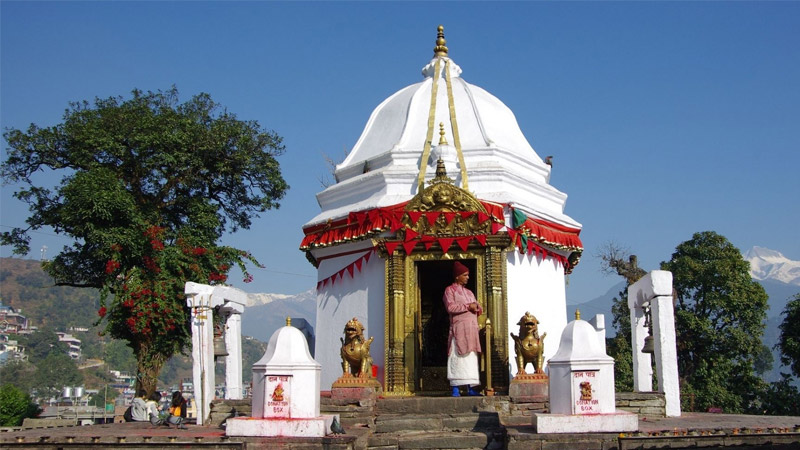
Bindabasini Temple holds immense religious importance for Hindus in Pokhara and across the Kaski region. As one of the most respected shrines in western Nepal, the temple is a daily place of worship for devotees seeking blessings, protection, and spiritual peace. The strong faith associated with the temple has made it an essential part of religious life in Pokhara for centuries.
The temple is not only a place for individual prayer but also a center for collective worship during festivals and special religious occasions. Its spiritual atmosphere, traditional rituals, and deep-rooted beliefs continue to attract pilgrims as well as culturally curious travelers.
Which Goddess Is Worshipped at Bindabasini Temple
Bindabasini Temple is dedicated to Goddess Bindabasini, who is worshipped as a manifestation of Goddess Durga. She represents divine feminine energy and is believed to embody strength, protection, and compassion. In Hindu belief, Goddess Durga is the destroyer of evil forces and the protector of righteousness.
Devotees regard Goddess Bindabasini as the guardian deity of Pokhara. Many locals believe that her presence safeguards the city from natural calamities and negative influences. As a result, daily worship and offerings at the temple remain an important religious practice for families living in the region.
Importance of Bindabasini Temple in Hindu Tradition
In Hindu tradition, temples dedicated to Goddess Durga are considered highly auspicious, especially during times of transition or hardship. Bindabasini Temple plays a vital role in this tradition, as devotees visit the shrine to seek blessings for success, health, and protection.
The temple is especially significant during festivals such as Dashain, which celebrates the victory of good over evil. During this time, Bindabasini Temple becomes a focal point for ritual worship, animal sacrifices in traditional practice, and special ceremonies. These rituals highlight the temple’s role in preserving ancient Hindu customs and beliefs.
Special Beliefs and Local Faith Associated With the Temple
Local faith and traditional beliefs form a strong foundation of Bindabasini Temple’s spiritual importance. Many devotees believe that sincere prayers offered at the temple are fulfilled by Goddess Bindabasini. It is common for people to visit the temple before starting new businesses, embarking on long journeys, or making major life decisions.
There is also a belief among locals that the goddess protects Pokhara from disasters and brings harmony to the community. This deep sense of devotion has been passed down through generations, making Bindabasini Temple not only a religious landmark but also a symbol of collective faith and spiritual identity in Pokhara.
Darshan Timings and Opening Hours
Knowing the darshan timings of Bindabasini Temple helps visitors plan a peaceful and meaningful visit. The temple is open daily and welcomes devotees from early morning until evening. Regular darshan hours allow both locals and tourists to visit conveniently, whether they prefer a quiet morning prayer or an evening visit.
Timings may vary slightly depending on festivals, special rituals, and seasonal changes, so visitors are advised to remain flexible, especially during major Hindu celebrations.
Daily Darshan Timings of Bindabasini Temple
Bindabasini Temple generally opens early in the morning and remains accessible throughout the day. The usual darshan timings are:
-
Morning opening time: around 5:00 AM
-
Evening closing time: around 7:00 PM
Morning hours are mainly dedicated to puja and ritual offerings, while the evening period is popular for a calm darshan after sunset. The temple remains open throughout the day without a long midday closure, making it easy to include in a Pokhara sightseeing itinerary.
Best Time of Day for Peaceful Darshan
The best time for a peaceful darshan at Bindabasini Temple is early in the morning, shortly after opening hours. During this time, the temple is quieter, and visitors can experience a serene spiritual atmosphere with minimal crowds.
Late afternoon and early evening also offer a pleasant experience, especially for travelers who wish to enjoy the calm surroundings and views of Pokhara city. Midday hours tend to be busier, particularly during weekends and holidays.
Temple Timings During Festivals and Special Occasions
During major Hindu festivals such as Dashain, the temple opens earlier than usual and may remain open until late evening. Special puja, rituals, and religious ceremonies are conducted throughout the day, attracting a large number of devotees.
On festival days, crowd levels are significantly higher, and darshan time may take longer. Visitors are encouraged to arrive early, follow temple guidelines, and respect local customs during these special occasions. Checking with local sources or temple authorities before visiting during festivals is recommended.
Experience Bindabasini Temple and More in a Day!
Explore the spiritual and cultural highlights of Pokhara, including the sacred Bindabasini Temple, Phewa Lake, and Old Bazaar, all in a single day. Perfect for travelers with limited time who want a comprehensive Pokhara city experience.
Book Now: Full Day Pokhara City Sightseeing Tour
Location and How to Reach Bindabasini Temple

Bindabasini Temple is conveniently located within Pokhara city, making it easily accessible for both local worshippers and tourists. Its central position near the Old Bazaar allows visitors to combine the temple visit with other cultural and historical attractions in Pokhara.
The temple’s elevated setting offers a peaceful environment away from traffic noise while still remaining close to major tourist areas.
Exact Location of Bindabasini Temple in Pokhara
Bindabasini Temple is situated on a small hill in the Old Bazaar area of Pokhara, within Pokhara Metropolitan City, Kaski District. The temple lies approximately 2 to 3 kilometers north of the Lakeside area and is surrounded by traditional neighborhoods and local markets.
Due to its hilltop location, the temple also provides pleasant views of Pokhara city and nearby areas. Its proximity to the Old Bazaar makes it an ideal stop for travelers interested in exploring Pokhara’s cultural and historical side.
How to Reach Bindabasini Temple From Lakeside
Reaching Bindabasini Temple from the Lakeside area is easy and does not require long travel time. The journey usually takes around 10 to 15 minutes by vehicle, depending on traffic conditions.
Visitors can travel toward the Old Bazaar area and follow signboards directing them to Bindabasini Temple. The road leading to the temple is well maintained, and the final approach includes a short uphill walk or staircase, which adds to the spiritual experience of the visit.
Transportation Options, Taxi, Walking, and Local Buses
Taxis are the most convenient option for reaching Bindabasini Temple, especially for first-time visitors or those traveling with family. Taxis are widely available in Lakeside and other parts of Pokhara and can drop visitors close to the temple entrance.
Local buses also operate along routes connecting Lakeside, Mahendrapul, and the Old Bazaar area. From the nearest bus stop, visitors need to walk uphill for a short distance to reach the temple complex.
For those staying nearby or interested in a cultural walk, walking to the temple from surrounding areas is possible. Walking allows visitors to experience local life, traditional houses, and small markets along the way, making the journey to Bindabasini Temple as enriching as the visit itself.
Architecture and Temple परिसर (Temple Complex)
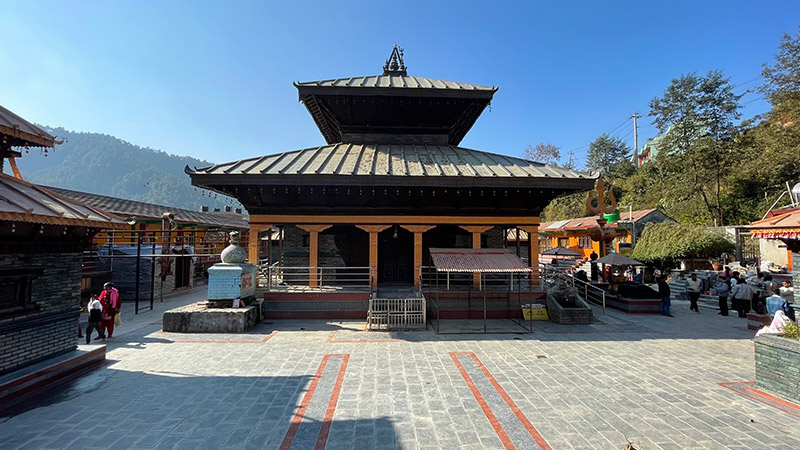
Bindabasini Temple is admired not only for its religious importance but also for its traditional architecture and well-maintained temple परिसर, or temple complex. The design reflects classic Nepali craftsmanship and offers a peaceful environment where visitors can observe religious activities and enjoy scenic surroundings.
The open courtyards, stone pathways, and elevated platforms create a calm and orderly layout, making the temple complex welcoming for both worshippers and tourists.
Traditional Nepali Pagoda-Style Architecture
The main shrine of Bindabasini Temple is built in the traditional Nepali pagoda style, which is commonly seen in historic Hindu temples across Nepal. The structure features a multi-tiered roof with carved wooden struts and intricate details that represent Hindu deities and mythological symbols.
The use of wood, stone, and metal elements highlights the craftsmanship of local artisans. The pagoda design not only adds aesthetic beauty but also symbolizes harmony between nature and spirituality, making the temple an architectural landmark in Pokhara.
Key Structures and Shrines Inside the Temple Complex
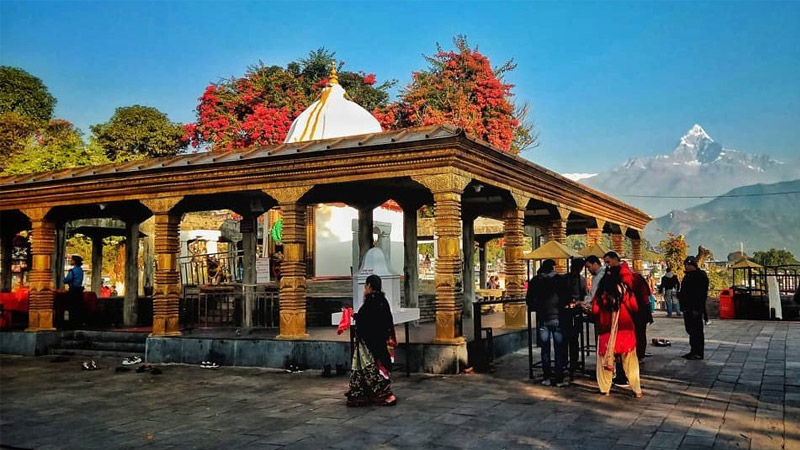
Within the temple परिसर, visitors will find several smaller shrines and religious structures dedicated to different Hindu deities. These include shrines for Lord Shiva, Ganesh, and other guardian deities, which are regularly worshipped by devotees.
The complex also includes open prayer areas, bell towers, and spaces where devotees offer flowers, incense, and oil lamps. These elements create a vibrant spiritual atmosphere and allow visitors to observe traditional Hindu rituals up close.
Viewpoints and Scenic City Views From the Temple Area
One of the highlights of visiting Bindabasini Temple is the scenic view it offers of Pokhara city and surrounding neighborhoods. Due to its hilltop location, the temple area provides clear views of the Old Bazaar, nearby residential areas, and parts of the Pokhara Valley.
Early mornings and late afternoons are especially pleasant for enjoying these views. The combination of spiritual surroundings and scenic city landscapes makes Bindabasini Temple a rewarding stop for visitors seeking both cultural insight and peaceful moments.
Festivals and Special Celebrations at Bindabasini Temple

Festivals and religious celebrations play a vital role in the spiritual life of Bindabasini Temple. Throughout the year, the temple hosts various Hindu festivals that attract large numbers of devotees from Pokhara and nearby regions. These occasions offer visitors a deeper insight into local traditions, rituals, and religious practices.
During festival periods, the temple becomes more vibrant and lively, filled with prayers, offerings, and traditional ceremonies that reflect the strong devotion of the local community.
Dashain and Other Major Hindu Festivals
Dashain is the most important festival celebrated at Bindabasini Temple and holds special religious significance. As a festival dedicated to Goddess Durga, Dashain marks the victory of good over evil. During this time, thousands of devotees visit the temple to offer prayers, receive tika and blessings, and participate in traditional rituals.
Apart from Dashain, other Hindu festivals such as Chaite Dashain, Navaratri, and special Durga puja days are also observed with devotion. On these occasions, the temple is decorated, and special ceremonies are conducted, making it an important spiritual gathering place.
Daily Rituals, Puja, and Offerings
Bindabasini Temple follows daily rituals that include morning and evening puja conducted by temple priests. Devotees offer flowers, fruits, incense, oil lamps, and coconuts as part of their worship. The ringing of bells and chanting of prayers create a peaceful and spiritual atmosphere throughout the day.
These daily rituals are open to the public, allowing visitors to observe or participate respectfully. Witnessing these practices provides a meaningful cultural experience and helps visitors understand Hindu worship traditions in Pokhara.
What Visitors Can Expect During Festival Days
During festival days, visitors should expect larger crowds, longer waiting times for darshan, and a more energetic atmosphere. The temple complex becomes busy with devotees, priests, and volunteers managing the flow of visitors.
While festival days can be crowded, they also offer a unique opportunity to experience local culture and religious devotion at its peak. Visitors are advised to dress modestly, follow temple guidelines, and be patient during darshan to fully appreciate the spiritual significance of the celebrations.
Best Time to Visit Bindabasini Temple
Planning the right time to visit Bindabasini Temple can enhance your experience and allow for a peaceful darshan. While the temple is open year-round, certain seasons and times of day are better for sightseeing, photography, and enjoying the serene atmosphere.
Understanding seasonal variations and visitor patterns will help you make the most of your visit to this spiritual landmark.
Best Season to Visit Bindabasini Temple in Pokhara
The ideal seasons to visit Bindabasini Temple are spring (March to May) and autumn (September to November). During these months, the weather is mild, skies are clear, and the surroundings are vibrant, providing excellent views of Pokhara city and the temple complex.
Spring brings blooming flowers and greenery around the temple hill, enhancing the spiritual ambiance. Autumn, following the monsoon, offers clear skies and cooler temperatures, making it comfortable for sightseeing and walking around the temple area.
Weather Conditions and Visitor Experience
Pokhara experiences a monsoon season (June to August), which brings heavy rainfall and slippery pathways around the temple. Visiting during this period can be challenging and less enjoyable due to wet conditions and occasional traffic disruptions.
Winter (December to February) is cooler, with morning mist and chilly winds, but the temple remains accessible. If visiting during winter, early mornings may be foggy, limiting scenic views, but the darshan experience is generally quiet and peaceful.
Peak vs Off-Season Travel Tips
Peak Season (Spring & Autumn):
-
Expect more visitors, especially on weekends and holidays.
-
Arrive early in the morning for a quieter experience.
-
Ideal for photography, clear views, and festival celebrations.
Off-Season (Monsoon & Winter):
-
Fewer crowds make darshan more peaceful.
-
Carry rain protection during monsoon visits.
-
Wear warm clothing in winter mornings and evenings.
By choosing the right season and time, visitors can balance spiritual experience, sightseeing, and comfort while visiting Bindabasini Temple.
Entry Fee, Rules, and Dress Code

Visiting Bindabasini Temple is a spiritual experience that comes with simple guidelines to ensure respect for the sacred site. Being aware of entry fees, dress codes, and temple rules helps visitors enjoy a smooth and respectful visit.
The temple welcomes everyone, but following local customs and etiquette is essential to maintain its sanctity and the comfort of devotees.
Entry Fee and Donation Information
Entrance to Bindabasini Temple is free for all visitors, making it easily accessible to locals and tourists alike. However, devotees often make voluntary donations to support temple maintenance and daily rituals.
Donation boxes are available near the main shrine, and contributions of any size are appreciated. Visitors can also participate by offering flowers, fruits, or small monetary offerings directly to the priests during puja.
Dress Code and Visitor Etiquette
Visitors are encouraged to dress modestly when entering the temple. Clothing should cover shoulders and knees, reflecting respect for local religious customs.
Additional etiquette includes:
-
Removing shoes before entering the main temple area.
-
Speaking softly and avoiding loud conversations.
-
Observing and respecting ongoing rituals without interfering.
-
Avoiding sitting or standing in sacred areas reserved for priests and devotees.
Following these simple guidelines ensures a meaningful and respectful experience for all visitors.
Photography Rules Inside the Temple Area
Photography is permitted in the temple premises, but visitors should be mindful of the following:
-
Avoid photographing priests or devotees without permission during rituals.
-
Do not use flash in sensitive areas, as it can disturb the spiritual ambiance.
-
Focus on architectural and scenic views, but respect personal space and religious practices.
By adhering to these rules, visitors can capture memories while maintaining the sanctity of Bindabasini Temple.
Things to Know Before Visiting Bindabasini Temple
Visiting Bindabasini Temple can be a rewarding spiritual and cultural experience if you plan ahead. Understanding practical tips, safety measures, and accessibility information ensures a smooth visit for first-time travelers, families, and elderly visitors.
Important Tips for First-Time Visitors
-
Arrive Early: For a peaceful experience and to avoid long queues, especially during festival days.
-
Carry Essentials: Water, small offerings like flowers or incense, and a camera for scenic views.
-
Respect Local Customs: Observe rituals quietly and follow temple guidelines.
-
Comfortable Footwear: Since the temple is on a small hill, comfortable shoes are recommended for walking.
These simple preparations can enhance your visit and help you fully enjoy the spiritual atmosphere.
Safety, Crowd Management, and Accessibility
-
Crowds: During major festivals like Dashain, the temple attracts thousands of devotees. Plan accordingly and be patient during darshan.
-
Accessibility: The temple involves some uphill walking and staircases. It may be challenging for visitors with mobility issues, so plan transportation or assistance as needed.
-
Safety: Watch your step, especially during monsoon or rainy days, as pathways can become slippery.
Being aware of these factors ensures a safe and pleasant visit for everyone.
Visiting With Family and Elderly Travelers
Bindabasini Temple is family-friendly, but extra care is needed for young children and elderly travelers.
-
Children: Keep them close during crowded periods to prevent getting separated.
-
Elderly Visitors: Use taxis or private vehicles to reach the hilltop and allow extra time for walking.
-
Family Visits: The temple’s peaceful surroundings and open courtyards make it suitable for family visits, combining spiritual experience with sightseeing.
Discover Nepal’s Culture and Heritage with Bindabasini Temple!
This 8-day tour combines the best of Kathmandu and Pokhara, including Bindabasini Temple, Phewa Lake, and UNESCO World Heritage Sites. Immerse yourself in Nepal’s spiritual and cultural richness with guided visits and comfortable travel.
Book Your Tour: 8 Days Kathmandu & Pokhara City Tour Package
Nearby Attractions to Visit Along With Bindabasini Temple

Visiting Bindabasini Temple offers more than just a spiritual experience. Its central location in Pokhara makes it easy to explore several nearby attractions. Combining these sites into your itinerary allows you to enjoy cultural, scenic, and religious highlights all in one trip.
Pokhara Old Bazaar
Just a short walk from Bindabasini Temple, Pokhara Old Bazaar is a vibrant market area filled with local shops, traditional handicrafts, and street food stalls. The bazaar gives visitors a glimpse into everyday life in Pokhara and is ideal for picking up souvenirs or trying local delicacies.
The area’s narrow lanes and historic architecture complement a visit to the temple, creating a culturally rich experience for travelers interested in history, local markets, and traditional Nepali life.
Phewa Lake and Lakeside Area
Located only a few kilometers away, Phewa Lake is one of Pokhara’s most iconic attractions. Visitors can enjoy boating on the tranquil lake, visit the Tal Barahi Temple situated on a small island, or relax along the Lakeside promenade, which is lined with cafes, shops, and restaurants.
Combining Bindabasini Temple with Phewa Lake allows travelers to balance spirituality with leisure, making it perfect for a half-day or full-day sightseeing plan.
World Peace Pagoda and Other Religious Sites
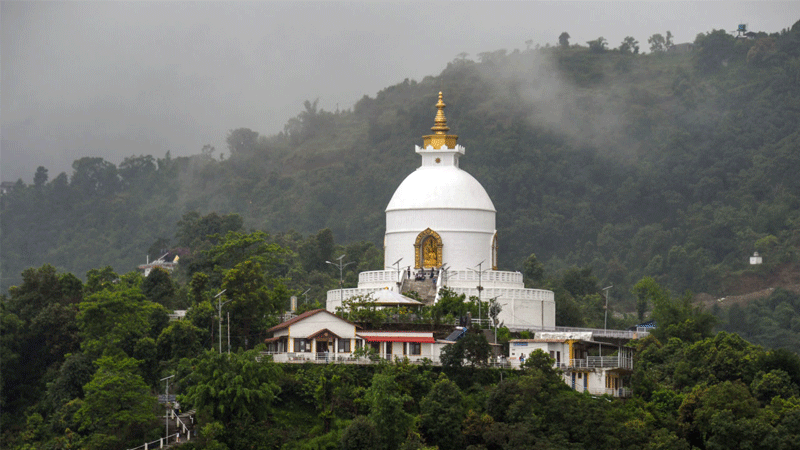
For those interested in religious and cultural exploration, the World Peace Pagoda is a short drive or hike from Bindabasini Temple. Perched on a hilltop, it offers panoramic views of Pokhara, Phewa Lake, and the surrounding mountains.
Other nearby temples and shrines provide additional opportunities to experience local religious practices and traditional architecture. Visiting these sites along with Bindabasini Temple gives tourists a comprehensive spiritual and cultural tour of Pokhara.
Bindabasini Temple in Pokhara City Sightseeing Tours
Bindabasini Temple is a key attraction included in most Pokhara city sightseeing tours. Its religious significance, central location, and panoramic views make it a must-visit destination for tourists looking to experience both the spiritual and cultural essence of the city.
Including Bindabasini Temple in a sightseeing tour ensures travelers get a balanced itinerary that combines history, religion, architecture, and local culture.
Why Bindabasini Temple Is Included in Pokhara City Tours
Tour operators include Bindabasini Temple in city tours because it provides a unique spiritual and cultural experience. Visitors can witness traditional Hindu rituals, explore historic architecture, and enjoy scenic views of Pokhara city from the temple hill.
The temple also represents the religious heart of Pokhara, making it an essential stop for travelers seeking to understand the city’s cultural identity. Its accessibility from major tourist areas adds to its convenience for guided and self-guided tours alike.
Ideal Time Allocation During a Sightseeing Tour
Most sightseeing itineraries allocate 30 to 60 minutes for a visit to Bindabasini Temple. This allows sufficient time for:
-
A calm darshan and prayer session
-
Exploring the temple complex and nearby shrines
-
Capturing photographs of the architecture and city views
-
Brief walks around the Old Bazaar if included in the tour
Morning visits are preferred for a quieter experience, while afternoon visits are suitable for combining with nearby attractions like Phewa Lake or Lakeside.
Combining Bindabasini Temple With Other Pokhara Highlights
Bindabasini Temple can easily be combined with other popular Pokhara attractions to create a seamless sightseeing experience. Typical combinations include:
-
Phewa Lake and Tal Barahi Temple: Enjoy boating and lakeside views after temple darshan
-
Old Bazaar: Explore local markets and cultural shops nearby
-
World Peace Pagoda: Take a short hike or drive for panoramic city and lake views
This combination ensures travelers experience Pokhara’s cultural, religious, and natural highlights in a single, well-planned itinerary.
Conclusion

Bindabasini Temple is more than just a religious site; it is a symbol of Pokhara’s spiritual and cultural heritage. Visiting this temple offers travelers a unique opportunity to experience local traditions, historic architecture, and the serene atmosphere of one of Nepal’s most revered Hindu shrines.
Including Bindabasini Temple in your Pokhara itinerary allows you to balance sightseeing, spirituality, and cultural immersion, making your trip to the city truly memorable.
Why Bindabasini Temple Should Be on Your Pokhara Travel Itinerary
Bindabasini Temple is a must-visit for several reasons:
-
It is one of the oldest and most sacred temples in Pokhara.
-
The temple offers panoramic views of Pokhara city and surrounding areas.
-
Visitors can witness traditional Hindu rituals and festivals firsthand.
-
Its location near Pokhara Old Bazaar and other attractions makes it easy to include in a city sightseeing plan.
Whether you are a pilgrim, a cultural enthusiast, or a first-time visitor to Pokhara, Bindabasini Temple provides a meaningful and enriching experience that reflects the city’s spiritual heart.
Final Travel Tips for a Meaningful and Peaceful Visit
-
Arrive Early: Morning hours are quieter and ideal for peaceful darshan.
-
Dress Modestly: Respect local customs by covering shoulders and knees.
-
Follow Temple Etiquette: Remove shoes, speak softly, and observe rituals respectfully.
-
Combine Attractions: Pair your visit with nearby sights like Phewa Lake, Old Bazaar, or World Peace Pagoda.
-
Check Festival Schedules: Visiting during Dashain or other major festivals offers a vibrant cultural experience but may be crowded.
Visit Bindabasini Temple in Style on Nepal’s Grand Luxury Tour!
Experience the ultimate Nepal travel experience with luxury accommodations, expert guides, and exclusive sightseeing, including Bindabasini Temple, Pokhara city highlights, and more. Perfect for travelers who want comfort, culture, and convenience in one package.
Reserve Your Spot: Grand Luxury Nepal Tour