
Introduction
Doleshwar Mahadev Temple is one of the most revered Hindu temples in Nepal, dedicated to Lord Shiva. Located in a peaceful hill area of the Bhaktapur district, this sacred site holds deep spiritual value for devotees and has gained increasing attention from pilgrims, historians, and travelers. Surrounded by natural beauty and a calm atmosphere, the temple offers a meaningful blend of devotion, history, and culture.
Situated about 20 kilometers from Kathmandu, Doleshwar Mahadev Temple is easily accessible from both Kathmandu and Bhaktapur. Its close proximity to the Kathmandu Valley makes it a popular pilgrimage destination for local devotees as well as international visitors seeking spiritual experiences near the capital.
In Hindu pilgrimage tradition, Doleshwar Mahadev Temple is considered extremely important, especially for followers of Lord Shiva. The temple is believed to be closely connected with the famous Kedarnath Temple in India. According to Hindu mythology, Doleshwar Mahadev is recognized as the head part of Lord Shiva that appeared during the Pandavas’ search for Shiva after the Mahabharata war. This sacred connection has elevated Doleshwar Mahadev to a significant place in Shaivite worship.
In this guide, readers will learn about the history, religious importance, mythology, and cultural value of Doleshwar Mahadev Temple. The article also provides practical travel information, including location details, how to reach the temple, the best time to visit, and helpful tips for pilgrims and tourists.
Overview of Doleshwar Mahadev Temple
Doleshwar Mahadev Temple is a holy Shiva shrine where Lord Shiva is worshipped in the form of a natural stone Shiva Lingam. The temple stands on a forested hill, creating a serene environment ideal for meditation and prayer. Devotees believe that worshipping at Doleshwar Mahadev brings blessings, spiritual purification, and fulfillment of wishes.
The temple is also known by alternative names such as Doleshwor Mahadev and Doleswor Mahadev. Among local communities, it has long been regarded as a powerful and sacred place, even before its wider recognition as part of the Kedarnath legend. Local priests and residents have preserved its spiritual traditions for generations.
Doleshwar Mahadev Temple is considered one of the most sacred Shiva temples in Nepal because of its strong mythological association with Lord Shiva and its acceptance as the head part of Kedarnath by religious authorities from India. This rare spiritual connection makes the temple especially important for devotees who may not be able to travel to Kedarnath in Uttarakhand.
In recent years, the temple has seen growing popularity among pilgrims and travelers from Nepal, India, and other countries. Improved road access, increased religious awareness, and interest in spiritual tourism have contributed to its rising significance. Today, Doleshwar Mahadev Temple is not only a place of worship but also an important spiritual and cultural destination near Kathmandu.
History of Doleshwar Mahadev Temple

Ancient Origins and Discovery
The history of Doleshwar Mahadev Temple is deeply rooted in ancient Hindu tradition. For centuries, the temple site was worshipped by local communities as a sacred place dedicated to Lord Shiva. Although there are no precise written records documenting its early construction, oral traditions suggest that the Shiva Lingam at Doleshwar Mahadev has been revered since ancient times. The natural stone formation and the secluded hilltop setting reflect the characteristics of early Shaivite worship, where nature itself was considered divine.
For a long period, Doleshwar Mahadev remained a locally significant shrine, known mainly to nearby villagers and devotees. Its wider religious importance came to light in modern times when scholars, priests, and pilgrims began reexamining ancient legends related to Lord Shiva and the Pandavas. This rediscovery sparked interest in identifying the temple’s connection to broader Hindu mythology, particularly the Kedarnath legend.
Connection with Kedarnath Temple
One of the most important aspects of Doleshwar Mahadev Temple is its legendary connection with Kedarnath Temple in India. According to Hindu mythology, after the Mahabharata war, the Pandavas sought Lord Shiva to seek forgiveness for their sins. Shiva, unwilling to meet them, took the form of a bull and tried to hide. When the Pandavas recognized him, Shiva disappeared into the earth, and different parts of his body appeared in various locations.
It is believed that the hump of Lord Shiva appeared at Kedarnath in Uttarakhand, while the head part surfaced at Doleshwar Mahadev in Nepal. This belief has led devotees to regard Doleshwar Mahadev Temple as the spiritual continuation of Kedarnath, completing the divine form of Lord Shiva.
In 2009, priests and religious scholars from Kedarnath officially recognized Doleshwar Mahadev as the head part of Kedarnath. This recognition strengthened the temple’s religious status and established it as an important pilgrimage site for Shaivite devotees who wish to complete their spiritual journey associated with Kedarnath.
Historical Recognition and Restoration
Following its official recognition, Doleshwar Mahadev Temple gained national and international attention. Religious ceremonies and rituals aligned with Kedarnath traditions began to be performed at the temple, further reinforcing its spiritual importance. Special pujas, festivals, and annual celebrations now attract large numbers of devotees.
Along with growing recognition came efforts to improve and preserve the temple complex. Infrastructure development, such as better access roads, temple renovations, and visitor facilities, has been carried out while maintaining the site’s religious sanctity. Local communities, temple authorities, and cultural organizations continue to work together to protect the historical and spiritual heritage of Doleshwar Mahadev Temple for future generations.
Visit Doleshwor on a Kathmandu Hindu Pilgrimage
See Doleshwor Mahadev Temple and other sacred sites in one day.
👉 Book the tour
Religious and Spiritual Significance

Importance in Hindu Mythology
Doleshwar Mahadev Temple holds a special place in Hindu mythology due to its direct association with Lord Shiva, one of the principal deities of Hinduism. Lord Shiva is regarded as the destroyer of evil and the transformer within the Hindu trinity, and his presence is believed to bring spiritual balance, protection, and inner peace. At Doleshwar Mahadev, Shiva is worshipped in the form of a sacred Shiva Lingam, symbolizing cosmic energy and divine consciousness.
Although Doleshwar Mahadev Temple is not specifically mentioned by name in ancient scriptures, its spiritual importance is deeply rooted in Hindu beliefs and oral traditions connected to the Mahabharata era. Devotees believe that the energy of Lord Shiva manifested naturally at this site, making it a powerful place for worship, meditation, and spiritual purification. The temple is especially significant for followers of Shaivism, who consider it one of the most spiritually charged Shiva shrines in Nepal.
Why Doleshwar is Called the Head of Kedarnath
Doleshwar Mahadev Temple is widely known as the head part of Kedarnath due to its strong mythological connection with the Pandavas and Lord Shiva. As described in Hindu legends, when Lord Shiva tried to avoid the Pandavas after the Mahabharata war, he took the form of a bull. When discovered, his body disappeared into the earth, reappearing in different sacred locations.
According to belief, the head of Lord Shiva emerged at Doleshwar Mahadev in Nepal, while the hump appeared at Kedarnath in India. This mythological explanation gives Doleshwar Mahadev a unique spiritual status, as it is believed to complete the divine form of Lord Shiva worshipped at Kedarnath.
For devotees, this connection carries deep spiritual meaning. Visiting Doleshwar Mahadev is seen as a way to complete the Kedarnath pilgrimage, especially for those who cannot travel to the high-altitude Kedarnath Temple. Worship at Doleshwar Mahadev is believed to offer the same spiritual merit, blessings, and fulfillment associated with Kedarnath.
Festivals and Special Occasions
Doleshwar Mahadev Temple becomes especially vibrant during major Hindu festivals dedicated to Lord Shiva. These occasions attract large numbers of devotees from Nepal and India.
Maha Shivaratri is the most important festival celebrated at the temple. Thousands of devotees gather to offer prayers, perform night-long vigils, and seek blessings from Lord Shiva. The temple complex is filled with spiritual energy, chanting, and rituals throughout the day and night.
The Teej Festival is another significant occasion, particularly for women devotees. Married and unmarried women visit the temple to pray for marital happiness, family well-being, and fulfillment of wishes. Fasting, singing devotional songs, and offering prayers to Lord Shiva and Goddess Parvati are central to the celebrations.
The month of Shrawan is considered highly auspicious for Shiva worship. During this time, devotees visit Doleshwar Mahadev Temple every Monday to offer water, milk, and sacred leaves to the Shiva Lingam. The temple sees a steady flow of pilgrims throughout the month, making Shrawan one of the most spiritually active periods at Doleshwar Mahadev Temple.
Architecture and Temple Complex

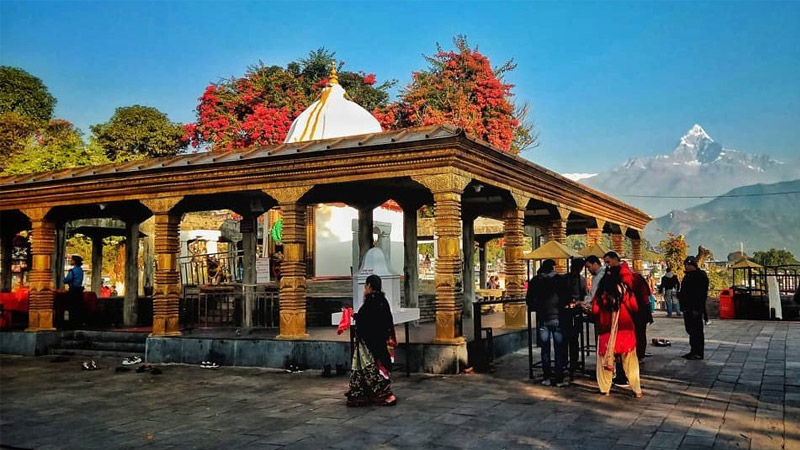
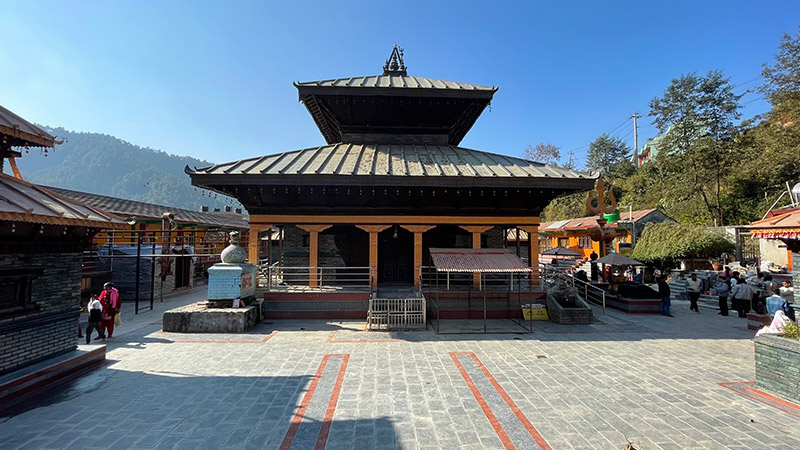
Doleshwar Mahadev Temple reflects a traditional Nepali temple design that blends religious architecture with the natural landscape. The temple structure is simple yet spiritually powerful, built in harmony with its surroundings. Stone, wood, and metal elements are used in a classic Nepali style, emphasizing devotion rather than grandeur. The design allows devotees to focus on prayer, meditation, and spiritual connection.
At the heart of the temple lies the sacred Shiva Lingam, which is believed to be a natural manifestation of Lord Shiva. The sanctum is modest and serene, creating an intimate space for worship. Devotees offer water, milk, flowers, and bilva leaves to the Lingam, following ancient Shaivite rituals. The simplicity of the sanctum enhances the spiritual intensity of the temple, allowing visitors to experience a deep sense of peace and devotion.
Surrounding the main shrine are smaller shrines and statues dedicated to various Hindu deities and divine symbols associated with Lord Shiva. These include representations of Nandi, Shiva’s sacred bull, and other religious figures worshipped by devotees. Prayer bells, stone carvings, and ritual spaces add to the sacred atmosphere of the temple complex.
One of the most striking features of Doleshwar Mahadev Temple is its peaceful natural setting. Located on a forested hill, the temple is surrounded by greenery, fresh air, and scenic views. The calm environment, combined with the sounds of nature and temple bells, creates a spiritually uplifting atmosphere. This tranquil setting makes the temple an ideal place not only for worship but also for meditation and spiritual reflection.
Location of Doleshwar Mahadev Temple

Doleshwar Mahadev Temple is located in the Bhaktapur district of Nepal, on a quiet hill near the village of Sipadol. The temple sits at an elevation that offers a serene escape from the busy city while remaining easily accessible from the Kathmandu Valley.
The temple is approximately 20 kilometers from Kathmandu and about 10 kilometers from Bhaktapur Durbar Square. Due to its close proximity, many visitors choose to visit Doleshwar Mahadev as a half-day trip from Kathmandu or Bhaktapur. The route to the temple passes through scenic countryside, traditional villages, and winding hill roads.
Nearby villages such as Sipadol and surrounding Newari settlements add cultural richness to the journey. Popular landmarks close to Doleshwar Mahadev Temple include Bhaktapur Durbar Square, Changunarayan Temple, and Nagarkot. These nearby attractions make it easy to combine a visit to Doleshwar Mahadev with other historical and cultural sites in the Bhaktapur area.
How to Reach Doleshwar Mahadev Temple

Doleshwar Mahadev Temple is easily accessible from both Kathmandu and Bhaktapur, making it a convenient pilgrimage and sightseeing destination within the Kathmandu Valley. Visitors can choose private transport or local public vehicles depending on comfort and budget.
From Kathmandu
Private Vehicle or Taxi
Traveling by private vehicle or taxi is the most comfortable and time-efficient way to reach Doleshwar Mahadev Temple from Kathmandu. The journey takes approximately 45 minutes to 1 hour, depending on traffic conditions. The usual route passes through Bhaktapur or Koteshwor toward Sipadol. Taxis are readily available throughout Kathmandu, and most drivers are familiar with Doleshwar Mahadev Temple.
Local Bus Routes
Local buses and microbuses operate from various parts of Kathmandu toward Bhaktapur and Sipadol. Buses heading to Bhaktapur or Kamalbinayak can be used, followed by a short local ride or walk toward the temple. While this option is more economical, it may take longer and require basic knowledge of local transport routes.
From Bhaktapur
From Bhaktapur, Doleshwar Mahadev Temple is only a short distance away. Visitors can reach the temple by taxi or private vehicle in about 20 to 30 minutes. The drive passes through local settlements and scenic hillside roads.
For those who enjoy walking, it is possible to combine a short drive with a walking route from nearby areas. The walk offers beautiful views of the surrounding countryside and a peaceful approach to the temple, especially in the early morning hours.
Road Conditions and Travel Tips
The road leading to Doleshwar Mahadev Temple is mostly paved and suitable for cars, motorcycles, and small vehicles. Some sections near the temple may be narrow and winding, so careful driving is recommended, especially during the monsoon season.
The best route is via Bhaktapur or Kamalbinayak toward Sipadol, which offers smoother roads and clearer directions. Parking space is available near the temple area, though it can become crowded during festivals and peak pilgrimage times. Visitors are advised to arrive early during major religious occasions to avoid congestion and ensure easy access.
Best Time to Visit Doleshwar Mahadev Temple

Doleshwar Mahadev Temple can be visited throughout the year, but certain seasons and times offer a more comfortable and spiritually enriching experience.
The ideal seasons to visit are spring and autumn. These periods provide pleasant weather, clear skies, and comfortable temperatures, making travel and temple visits enjoyable.
The best months for clear weather are from March to May and from September to November. During these months, the surrounding hills are green, visibility is good, and the temple area remains peaceful, except during major festivals.
Visiting during festival times offers a powerful spiritual experience. Maha Shivaratri, Teej, and the month of Shrawan attract large numbers of devotees and feature special rituals and celebrations. While the atmosphere is vibrant and devotional, visitors should expect crowds during these periods.
An early morning visit is ideal for peaceful darshan, meditation, and enjoying the calm natural surroundings. Morning hours are quieter and allow devotees to perform prayers without rush. Evening visits are also popular, especially during aarti time, offering a serene and spiritual ambiance as the temple lights and chants create a devotional mood.
Darshan Timings and Entry Information

Doleshwar Mahadev Temple is generally open daily for devotees and visitors. Opening hours usually begin early in the morning around 5:00 AM, and the temple remains open until approximately 8:00 PM. Timings may vary slightly during festivals and special occasions.
The best time for peaceful darshan is early morning or late afternoon on regular days. These times are less crowded and allow for a more personal and reflective experience.
There is no fixed entry fee to visit Doleshwar Mahadev Temple. However, devotees are encouraged to offer voluntary donations to support temple maintenance and religious activities.
Photography rules are generally flexible in the outer temple complex, but photography inside the main sanctum is usually restricted. Visitors should always follow posted signs and respect the instructions of temple priests and staff.
Things to Know Before Visiting

Visitors are advised to follow a modest dress code when visiting Doleshwar Mahadev Temple. Wearing clothes that cover shoulders and knees is considered respectful. Shoes must be removed before entering the temple premises.
Regarding offerings and rituals, devotees commonly offer water, milk, flowers, incense, and bilva leaves to the Shiva Lingam. It is best to follow the guidance of temple priests and avoid touching the Lingam unless permitted.
Proper behavior inside the temple complex is essential. Visitors should maintain silence, avoid loud conversations, and show respect to worshippers and religious practices. Alcohol, smoking, and non-vegetarian food are strictly prohibited within the temple area. Respecting these customs ensures a peaceful and spiritually meaningful visit for everyone.
Nearby Attractions to Explore

A visit to Doleshwar Mahadev Temple can be easily combined with several important cultural and natural attractions in the Bhaktapur area, making it a rewarding experience for both pilgrims and travelers.
Bhaktapur Durbar Square is a UNESCO World Heritage Site and one of the best-preserved royal squares in Nepal. Located about 10 kilometers from Doleshwar Mahadev Temple, it features ancient palaces, temples, courtyards, and traditional Newari architecture. Visitors can explore landmarks such as the 55-Window Palace, Nyatapola Temple, and Pottery Square.
Changunarayan Temple, another UNESCO World Heritage Site, is one of the oldest Hindu temples in Nepal and is dedicated to Lord Vishnu. It is located on a hilltop near Bhaktapur and is known for its rich history, stone inscriptions, and peaceful surroundings. Many visitors include Changunarayan in their itinerary along with Doleshwar Mahadev.
Nagarkot viewpoint is famous for its panoramic Himalayan views, especially during sunrise and sunset. Located a short drive from Doleshwar Mahadev Temple, Nagarkot is an excellent spot to relax, enjoy nature, and experience the scenic beauty of the Kathmandu Valley.
Exploring traditional Newari villages around Bhaktapur offers insight into local culture, lifestyle, and heritage. These villages showcase traditional houses, temples, festivals, and authentic Newari cuisine, adding cultural depth to your visit.
Accommodation and Food Options

There are several comfortable hotels and guesthouses near Bhaktapur that cater to different budgets. Visitors can find heritage hotels, boutique guesthouses, and modern accommodations close to Bhaktapur Durbar Square and surrounding areas.
When choosing between staying in Kathmandu or Bhaktapur, both options have advantages. Kathmandu offers a wider range of hotels, restaurants, and transport facilities, making it convenient for travelers with tight schedules. Bhaktapur, on the other hand, provides a quieter and more traditional atmosphere, ideal for travelers seeking a peaceful stay close to cultural sites.
Local food options and restaurants in Bhaktapur are popular for authentic Newari cuisine. Visitors should try local dishes such as bara, yomari, choila, and traditional Newari set meals. Cafes and restaurants around Bhaktapur Durbar Square also offer Nepali, Asian, and international food options.
Travel Tips for Pilgrims and Tourists

For visitors with limited time, a half-day itinerary can include Doleshwar Mahadev Temple followed by Bhaktapur Durbar Square. A full-day itinerary allows time to explore Doleshwar Mahadev, Changunarayan Temple, and end the day at Nagarkot for sunset views.
Combining Doleshwar Mahadev Temple with other heritage sites in the Bhaktapur area is highly recommended. This approach offers a balanced experience of spiritual, cultural, and scenic attractions in one trip.
For safety and comfort, visitors should carry water, especially during warmer months, and be cautious on narrow or hilly roads. During festivals, arriving early helps avoid crowds and traffic congestion.
Wearing comfortable footwear is important, as some walking may be required around the temple and nearby sites. Essentials such as sunscreen, light jackets in cooler months, and small cash for donations and local purchases are also recommended for a smooth and enjoyable visit.
Why You Should Visit Doleshwar Mahadev Temple

Doleshwar Mahadev Temple offers deep spiritual value for devotees of Lord Shiva. Worshipping at this sacred site is believed to bring inner peace, spiritual purification, and blessings. For many pilgrims, visiting Doleshwar Mahadev is a meaningful spiritual journey that strengthens faith and devotion.
The temple also holds great cultural importance in Nepal’s religious heritage. Its ancient roots, strong mythological background, and connection with the Mahabharata tradition make it an important symbol of Hindu belief and history. The rituals, festivals, and local traditions associated with the temple reflect Nepal’s rich spiritual culture.
One of the major reasons to visit Doleshwar Mahadev Temple is its peaceful environment close to Kathmandu. Located just a short distance from the busy capital, the temple provides a calm and serene setting surrounded by nature. This makes it an ideal place for meditation, reflection, and escaping the fast pace of city life.
The unique connection to Kedarnath sets Doleshwar Mahadev Temple apart from other Shiva temples in Nepal. Being recognized as the head part of Kedarnath gives the temple exceptional religious significance. For devotees who are unable to travel to Kedarnath in India, Doleshwar Mahadev offers a powerful spiritual alternative that completes the sacred pilgrimage experience.
Conclusion
Doleshwar Mahadev Temple stands as a remarkable blend of history, mythology, and spiritual devotion. Its ancient origins, strong association with Lord Shiva, and sacred connection to Kedarnath make it one of the most important Hindu pilgrimage sites in Nepal. The temple’s peaceful surroundings and cultural richness further enhance its spiritual appeal.
Whether you are a pilgrim seeking blessings or a traveler interested in Nepal’s religious heritage, Doleshwar Mahadev Temple is a destination worth visiting. Easily accessible from Kathmandu and Bhaktapur, it offers a meaningful and enriching experience within a short journey.
Visitors are encouraged to practice responsible and respectful travel by following temple rules, respecting local customs, and preserving the sanctity of the site. By doing so, you help protect the spiritual and cultural value of Doleshwar Mahadev Temple for future generations.
Doleshwor Day Tour from Kathmandu
Experience Doleshwor Mahadev Temple on our one-day guided pilgrimage.
👉 Check details